
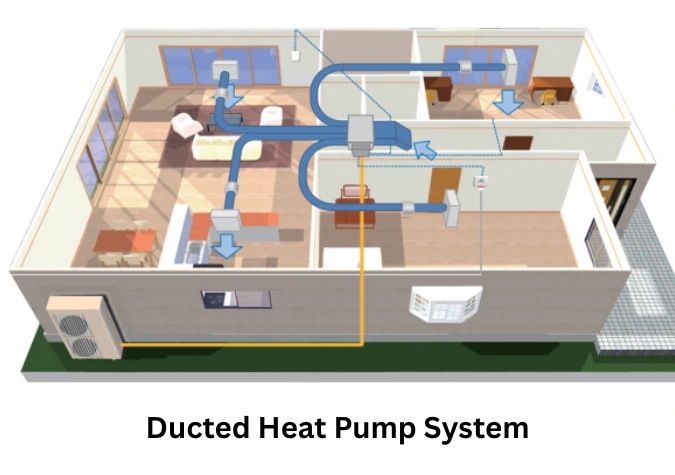
For year-round comfort, there are few solutions that result in a seamless performance of a ducted system. In comparison to standalone units that target a single area, a ducted heat pump ensures a “whole-home” climate control. Now, for homeowners planning a renovation, the question arises: exactly how many rooms can one system handle?
A simple answer to this is that a ducted system can usually operate between 4 and 10 rooms, based on the capacity of the outdoor unit and the complexity of the ductwork. However, the truth is the way the system is designed to meet your specific needs.
Understanding System Capacity and Layout
The number of rooms a system can manage is determined by its kilowatt (kW) rating. For a small townhouse, a standard residential system ranges from 7kW to 20kW and for a sprawling multi-story residence, it exceeds.
While designing, an HVAC specialist evaluates the “heat load” of each room. There are several factors, such as ceiling height, window size, and insulation levels, that determine the quantity of air that is to be delivered to each space. A single large unit transfers air to every corner of a house, thereby ensuring a balanced airflow. For larger homes, it is not just limited to the number of rooms, but the total volume of air that can be transferred by the system, without losing pressure.
The Role of Zoning
The biggest advantage of modern systems is zoning. You might have vents in eight different rooms, but you don’t want all of them to operate at the same time. The process of zoning divides your home into sections like “Living,” “Bedrooms,” and “Guest Wing.”
Investing in ducted heat pumps in central Auckland ensures zoning for energy efficiency. However, by turning off the airflow to the lounge at night while keeping the bedrooms perfectly tempered, you tend to reduce the pressure on the unit, thereby saving your power bills. Even high-end controllers regulate individual temperature in different rooms. This means that the master bedroom can be a crisp 18°C while the nursery remains at 21°C.
Why Local Layout Matters
In the older suburbs in New Zealand, housing styles differ from high-ceilinged heritage villas to compact modern apartments. Each requires a different approach to ducting. For example, a villa with a large roof cavity is best for a ceiling-mounted system that can reach five or six bedrooms. Whereas a house on a concrete slab with limited ceiling space requires an entire underfloor ducting system.
To ensure an optimal performance of the ducted heat pumps in central Auckland, it is important to understand the local climate. The high humidity in Auckland is necessary for dehumidification, which helps prevent dampness that might result in the formation of mould.
About Absolute Cool
Based in Penrose, we at Absolute Cool deliver premium climate control to homes and businesses. Our dedicated team, comprising NZQA-qualified professionals, upholds their technical expertise during every installation.
Whether you want a retrofit a classic villa or integrate a hidden system into a new architectural masterpiece, we offer customised designs, thereby ensuring a smooth operation and a higher level of savings on energy bills. From initial consultation to ongoing maintenance, we emerge as the leading provider of healthier and comfortable indoor environments for the most trusted brands, such as Mitsubishi Electric, Daikin, Panasonic, and Fujitsu.